
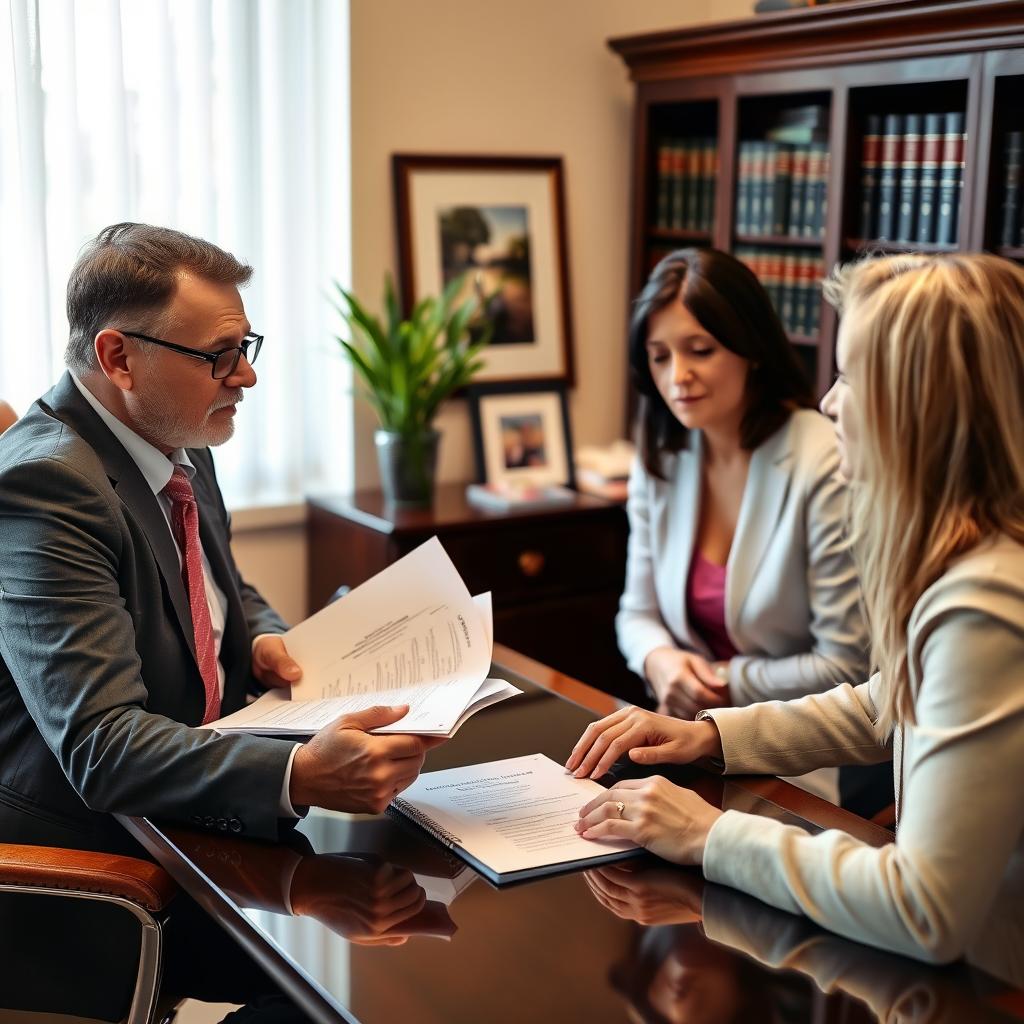
spousal support lawyer Montgomery County, VA
Spousal support—often called alimony or spousal maintenance—can be one of the most contested issues in a divorce. In Montgomery County, Virginia, either party may request support when the financial circumstances of the marriage create a disparity after separation. The Montgomery County Juvenile & Domestic Relations District Court and the Montgomery County Circuit Court have authority over support determinations under Va. Code § 20-107.1. Law Offices Of SRIS, P.C. Concentrates its practice on family law matters, including spousal support, through its Shenandoah Location at 505 N Main St, Suite 103, Woodstock, VA 22664. Mr. Sris and the firm’s Of Counsel attorneys appear in Montgomery County courts serving Christiansburg, Blacksburg, Riner, Shawsville, and Elliston. If you are facing a spousal support dispute or need to understand your rights, contact Law Offices Of SRIS, P.C. at (888) 437-7747 for a consultation. Law Offices Of SRIS, P.C. – Advocacy Without Borders.
What Spousal Support Means in Montgomery County, Virginia
Virginia is an equitable distribution state. When a marriage ends, a court may order one spouse to pay support to the other if an income or need gap exists. The request can be made pendente lite—while the divorce is pending—or as part of the final decree. The Montgomery County Circuit Court, located at 55 East Main Street, Christiansburg, hears divorce and equitable distribution matters, while the Juvenile & Domestic Relations District Court initially addresses support and custody issues. The court’s analysis is guided by thirteen factors set out at Va. Code § 20-107.1, including the earning capacity and obligations of each party, the standard of living established during the marriage, the duration of the marriage, and the contributions of each spouse to the family and the other’s career.
Because spousal support is fact‑sensitive, no two cases unfold the same way. A spouse who stayed home to raise children may seek rehabilitative support to re‑enter the workforce. A long‑term marriage may result in support of indefinite duration if the recipient cannot realistically become self‑supporting. Fault grounds such as adultery can affect a support award under Virginia law. The firm’s experience handling support claims in Montgomery County means we help clients organize financial disclosures, gather earning‑capacity evidence, and present a clear picture of the marital standard of living. Whether you are the party seeking support or the one from whom it is requested, we work to secure a result that reflects the statutory factors and your situation.
Virginia courts determine spousal support under Va. Code § 20‑107.1, which lists thirteen factors including the earning capacity, age, physical condition, and special needs of each party; the standard of living established during the marriage; the duration of the marriage; and the contributions of each spouse to the family and to the other’s career.
Source: Va. Code § 20‑107.1. Virginia Code Title 20, Chapter 6, Section 20‑107.1
Reviewed by Mr. Sris, admitted in VA/MD/DC/NJ/NY.
How Mr. Sris and the Firm’s Of Counsel Attorneys Handle Spousal Support Cases
When you engage Law Offices Of SRIS, P.C. for a spousal support matter, we begin with a thorough review of the marriage history and the finances of each party. Mr. Sris and the firm’s Of Counsel attorneys collect income records, tax returns, expense statements, and evidence of marital lifestyle. Because support arguments often turn on earning capacity and not just current income, we may engage vocational attorneys to evaluate a spouse’s ability to work or to earn more if a claim of voluntary underemployment exists.
If the parties can reach an agreement, we draft or review a comprehensive stipulation that captures the support terms, the duration and conditions of modification, and the tax treatment. When litigation is necessary, we file a complaint in the Montgomery County Juvenile & Domestic Relations District Court or the Circuit Court, depending on whether the divorce is already pending. We present the statutory factors through testimony and exhibits and cross‑examine opposing witnesses. Throughout the process, we remain focused on achieving a fair resolution that complies with Va. Code § 20‑107.1. Because every case is unique, the timeline varies depending on the court’s schedule, the complexity of the assets, and whether temporary support is needed. We keep you informed so you can make decisions grounded in the law and the facts.
About Mr. Sris and the Firm’s Of Counsel Attorneys
Mr. Sris, Owner and Founder of Law Offices Of SRIS, P.C., has practiced since 1997. He is a former prosecutor. Mr. Sris testified before the Virginia House Courts of Justice Committee in support of 2019 HB 635 (chief patron Del. David Bulova). He is admitted in Virginia, Maryland, the District of Columbia, New Jersey, and New York, and he concentrates his practice on family law and complex civil litigation. In Montgomery County, Mr. Sris leads the firm’s family law work, supported by experienced Of Counsel attorneys who bring complementary backgrounds in litigation, negotiations, and trial advocacy.
The firm’s Of Counsel attorneys are independent practitioners who collaborate with Mr. Sris on family law cases. Together, the team draws on extensive combined legal experience to address the financial and emotional dimensions of spousal support disputes. The firm maintains a Shenandoah Location that serves Montgomery County and surrounding communities. Client matters remain personally overseen by Mr. Sris, who keeps his caseload intentionally small to ensure thorough preparation. For a consultation, call (888) 437-7747.
Frequently Asked Questions
What is spousal support in Virginia?
Spousal support is a payment from one spouse to the other after separation or divorce designed to reduce the economic impact of the marriage’s end. Under Va. Code § 20‑107.1, a court may award support on a temporary basis while a divorce is pending or as part of the final decree. Support may be periodic (monthly) or in a lump sum. The purpose is to address any substantial disparity in financial resources between the parties. Whether support is appropriate, how much it should be, and how long it should last are questions the court answers by examining the thirteen statutory factors. The outcome depends on the unique facts of each marriage.
How do Virginia courts determine spousal support?
The court considers the thirteen factors listed in Va. Code § 20‑107.1, including the earning capacity and obligations of each party, the standard of living during the marriage, the duration of the marriage, and the contributions, monetary and non‑monetary, of each spouse. The judge weighs these factors together; no single factor controls. For example, a long‑term marriage with a stay‑at‑home spouse who sacrificed career opportunities may result in a more substantial and longer support award. Fault grounds, such as adultery, may also affect the court’s decision. The analysis is equitable and individualized, so presenting a clear financial picture is essential.
Can spousal support be modified after a divorce?
Yes, spousal support may be modified if a material change in circumstances occurs, unless the parties agreed in writing that support is non‑modifiable. Common grounds for modification include a significant increase or decrease in the paying spouse’s income, the recipient’s remarriage, or a change in either party’s health. The party seeking modification must file a motion in the court that issued the original order. The court then evaluates whether the change is substantial, unforeseen, and likely to continue. If the original support was set by agreement and the agreement expressly waives the right to modify, the court typically cannot alter it.
How long do you have to be married to get spousal support in Virginia?
There is no fixed number of years that automatically entitles a spouse to spousal support; courts consider the duration of the marriage as one factor among thirteen. In practice, longer marriages—particularly those exceeding ten years—tend to increase the likelihood of a support award because the parties have typically intertwined their finances more deeply. However, even in a shorter marriage, support may be appropriate if one spouse cannot immediately become self‑supporting due to health, lack of education, or time away from the workforce. The analysis is fact‑specific, not based on a strict threshold.
Do I need a lawyer for spousal support in Montgomery County?
You are not required to have an attorney, but navigating Virginia’s spousal support laws without guidance can be challenging, particularly when the other party has representation. An attorney helps you gather and present the financial evidence the court needs, cross‑examine witnesses, and advocate for a fair result under the statutory factors. Because spousal support can have lasting financial consequences, working with an experienced family law attorney helps protect your interests. For a consultation, reach Law Offices Of SRIS, P.C. at (888) 437-7747.
What if my former spouse stops paying spousal support?
If a spouse fails to pay court‑ordered spousal support, you may file an enforcement motion in the court that issued the order, seeking remedies such as income withholding, contempt, or a money judgment. The court can compel payment through wage garnishment, place a lien on property, or hold the non‑paying party in contempt if the failure to pay is willful. The process begins with a formal show‑cause motion. The firm can assist with post‑judgment enforcement, including modifications when circumstances change. Prompt action is important because support arrearages can grow quickly.
Related family law services in Virginia:
Family lawyer in Fairfax County •
Family lawyer in Fairfax City •
Family lawyer in Prince William County •
Family lawyer in Henrico County
Virginia Courts •
Va. Code § 20‑107.1
Attorney advertising. Prior results do not guarantee a similar outcome.
Case results depend on a variety of factors unique to each case.
Results may vary.