
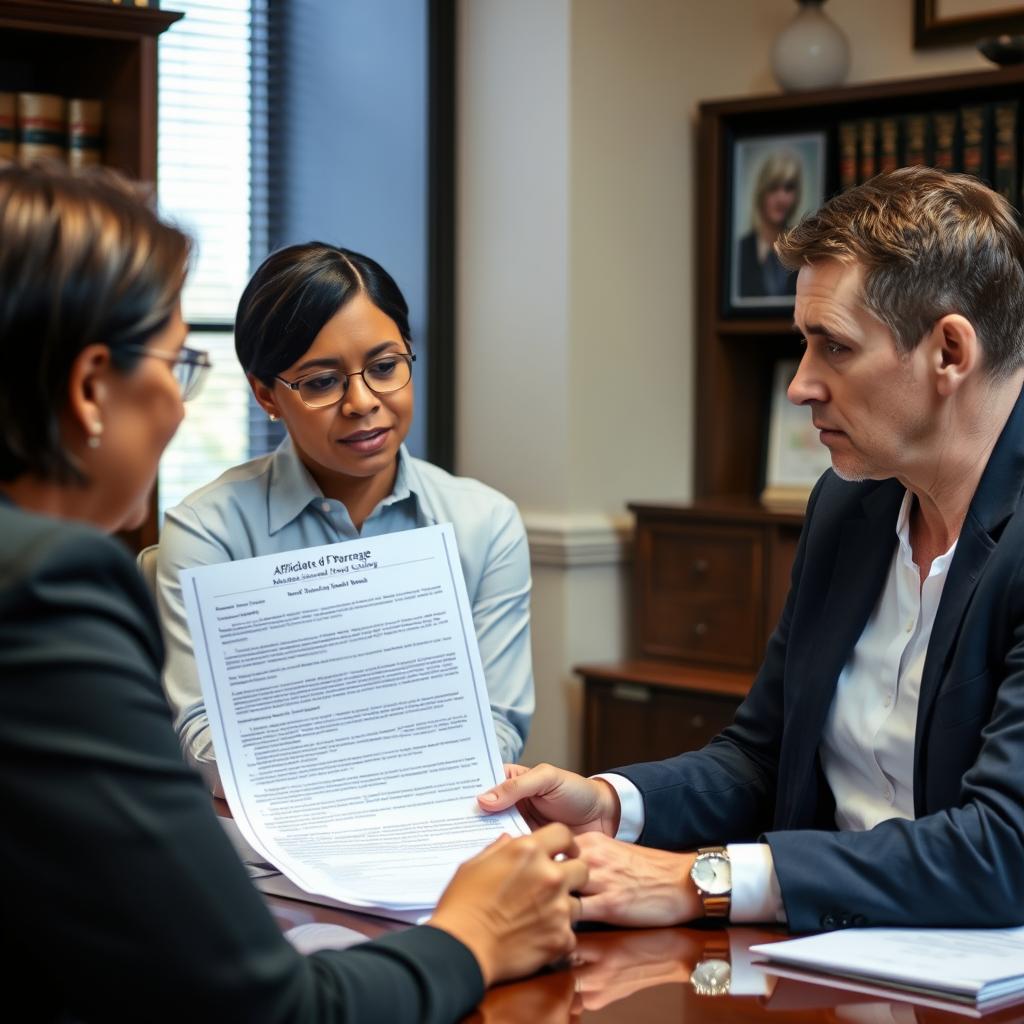
affidavit of parentage lawyer Prince George’s County, MD
Establishing legal parentage in Prince George’s County, Maryland, can feel urgent whether a child has just been born or paternity questions arise later. An affidavit of parentage is a powerful document that creates a legal father-child relationship without the need for court proceedings, but only when it is executed correctly and both parents understand its long-term consequences. A single mistake—such as signing under pressure, failing to rescind within the statutory window, or signing when another man is the biological father—can lead to future custody, support, and inheritance disputes. For residents of Upper Marlboro, Bowie, Hyattsville, College Park, and the surrounding communities, Law Offices Of SRIS, P.C. provides experienced guidance on affidavit of parentage matters. Mr. Sris and the firm’s Of Counsel attorneys work to protect parental rights and the best interests of the child in every case. For a confidential consultation, reach the firm’s Maryland location at (888) 437-7747.
What an Affidavit of Parentage Means in Prince George’s County
In Maryland, an affidavit of parentage is a legal form that, once completed and filed with the Division of Vital Records, establishes paternity—the legal relationship between a father and a child born to unmarried parents. Under the Maryland Family Law Article, Title 5, Subtitle 10, a properly executed affidavit has the same force and effect as a court order of paternity. The father’s name appears on the birth certificate, and he gains all the rights and responsibilities of legal parentage: custody, visitation, child support obligations, and inheritance rights for the child.
Prince George’s County families often first encounter this document at the hospital shortly after a child’s birth; hospitals such as the University of Maryland Capital Region Medical Center or MedStar Southern Maryland Hospital Center routinely present the affidavit for signature. However, parents may also sign the affidavit later at the local health department or through the Department of Social Services. It is critical to understand that signing is voluntary, but once the sixty-day rescission period passes, the affidavit can be challenged in court only on very limited grounds such as fraud, duress, or material mistake of fact. For a parent in Bowie or Laurel who later discovers the biological father is a different man, or for a mother in Greenbelt who signed while still recovering from childbirth and did not fully appreciate the document’s effect, the legal remedies become narrow and time-sensitive.
How Mr. Sris and the Firm’s Of Counsel Attorneys Handle Affidavit of Parentage Cases
Law Offices Of SRIS, P.C. takes a practical, protective approach to parentage matters. When both parents are in agreement and wish to establish paternity quickly, Mr. Sris and the firm’s Of Counsel attorneys review the affidavit before either party signs, confirming that the form is complete, the father’s identity is not in dispute, and both parents understand the permanent rights and duties the document creates. If questions arise—for example, whether a mother who was married to another man at the time of conception should instead pursue a court-ordered paternity test to avoid conflicting legal presumptions—the firm advises on the trusted path forward.
When one parent contests paternity or seeks to rescind or challenge an existing affidavit, the matter moves to the Prince George’s County Circuit Court or, for support-only proceedings, the District Court. Mr. Sris and the firm’s Of Counsel attorneys represent clients in paternity establishment, disestablishment, and rescission hearings. The firm’s attorneys handle genetic testing requests, prepare motions to set aside an affidavit based on fraud or duress, and advocate for custody and visitation arrangements consistent with the child’s well-being. Because these cases often intersect with child support orders, the firm coordinates with the Prince George’s County Office of Child Support Enforcement when necessary to protect the client’s financial interests. The firm’s multi-state experience also means it can assist when one parent lives in the District of Columbia or Virginia but the child resides in Prince George’s County, ensuring jurisdictional issues are handled correctly from the start.
About Mr. Sris and the Firm’s Of Counsel Attorneys
Mr. Sris founded Law Offices Of SRIS, P.C. in 1997 and serves as its Owner and Founder. A former prosecutor, he is admitted to practice law in Virginia, Maryland, the District of Columbia, New Jersey, and New York. Mr. Sris testified before the Virginia House Courts of Justice Committee in support of 2019 HB 635 (chief patron Del. David Bulova). Together with the firm’s Of Counsel attorneys, he brings multi-state experience to family law matters, including parentage disputes and affidavit-of-parentage issues arising in Prince George’s County. The firm’s Of Counsel attorneys include practitioners with backgrounds in litigation and family law; their collective knowledge allows the firm to address parentage questions with both legal precision and an understanding of how paternity findings affect custody, support, and a child’s long-term identity. Results depend on the facts of each case; prior results do not guarantee a similar outcome.
The firm’s Rockville location serves clients throughout Maryland, including Prince George’s County. Appointments are available by calling (888) 437-7747. The firm’s attorneys are available to discuss whether an affidavit of parentage is right for your situation, or to represent you in court if paternity is contested.
Frequently Asked Questions
Who can sign an affidavit of parentage in Maryland?
Both the birth mother and the alleged father must sign the affidavit voluntarily in front of a notary or designated witness. In Maryland, the affidavit of parentage is typically signed at the hospital when the child is born, but it can also be signed later at the local health department or the Division of Vital Records. Both parents must be at least eighteen years old and competent to understand the legal consequences. If the mother was married to another person at the time of conception or birth, additional legal steps may be needed because Maryland law presumes the husband is the legal father. An experienced family law attorney can help determine whether the affidavit is the correct tool or whether a court paternity action is required.
Can a father’s name be added to the birth certificate later if no affidavit was signed at the hospital?
Yes, a father’s name can be added to the Maryland birth certificate after birth by submitting a completed affidavit of parentage to the Division of Vital Records. Both parents must sign the affidavit in the presence of a notary, and the document must be filed with the state. If one parent refuses to sign or cannot be located, the other parent may need to file a paternity action in the Prince George’s County Circuit Court to obtain a court order establishing paternity. The court can order genetic testing, and if paternity is confirmed, the father’s name will be placed on the birth certificate. Consulting an attorney before filing can help avoid procedural delays.
Is there a way to cancel an affidavit of parentage after it is signed?
A rescission form may be filed within sixty days of signing the affidavit to cancel its legal effect. Both parents and the child, through a representative, have the right to rescind. After sixty days, the affidavit can be challenged only in court on limited grounds such as fraud, duress, or material mistake of fact. For example, if a man signed the affidavit believing he was the biological father but later learned through genetic testing that he was not, he may petition the Prince George’s County Circuit Court to set aside the paternity finding. These cases require strict adherence to statutory deadlines and evidentiary standards; an experienced family law attorney can assess the viability of a challenge.
Does signing an affidavit of parentage guarantee custody or visitation rights?
Signing an affidavit of parentage establishes legal paternity, but it does not automatically grant custody or visitation rights. Once paternity is legally recognized, the father has standing to petition the court for custody or visitation. In Maryland, custody decisions are based on the best interests of the child, considering factors such as the child’s relationship with each parent, each parent’s fitness, and the child’s preference if old enough. Without a court order, the mother typically retains sole legal and physical custody. A father who has signed an affidavit and wishes to establish a parenting plan should consult a family law attorney to initiate a custody case in the appropriate court.
How does the court handle paternity when the mother was married to someone else at the time of birth?
When a child is born to a married woman, Maryland law presumes the husband is the father, and an affidavit of parentage cannot be used to overcome that presumption. Instead, the biological father must file a paternity action in the Prince George’s County Circuit Court. The court may order genetic testing, and if the biological father is confirmed, the court can issue an order establishing paternity and terminating the husband’s parental rights if appropriate. These cases often involve multiple parties—the mother, the husband, and the biological father—and require careful navigation of Maryland’s parentage statutes. Legal representation helps protect the rights of all involved, especially the child.
What should a parent do if they were pressured into signing an affidavit of parentage?
A parent who signed under duress or undue influence should contact an attorney immediately to evaluate the possibility of rescission or a court challenge. Maryland law permits a rescission form to be filed within sixty days of signing for any reason. If the sixty-day window has passed, a parent may still petition the court to set aside the affidavit on the ground of duress. The court will examine the circumstances surrounding the signing, including whether one parent threatened or coerced the other. In Prince George’s County, these cases are heard in the Circuit Court; the burden of proof is on the party asserting duress. Because duress claims can be difficult to prove, obtaining prompt legal advice is essential.
Explore additional family law resources:
Montgomery County Family Lawyer |
Howard County Family Lawyer |
Anne Arundel County Family Lawyer |
Frederick County Family Lawyer |
Baltimore County Family Lawyer
Official Maryland parentage resources (links open in a new tab):
Maryland Department of Health – Affidavit of Parentage |
Maryland Family Law Article (Title 5) |
Maryland Courts – Family Law Information
Attorney advertising. Prior results do not guarantee a similar outcome. Results may vary.
Case results depend on a variety of factors unique to each case.