
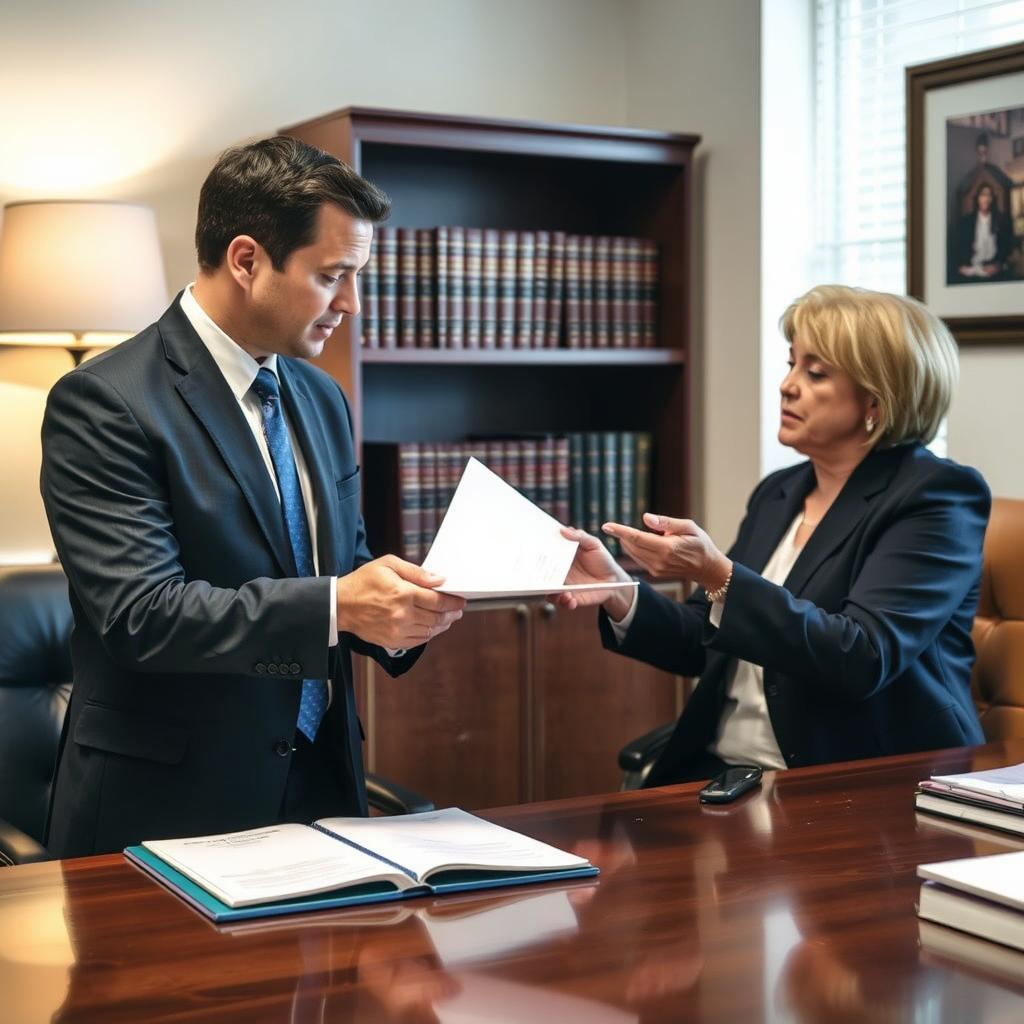
divorce decree modification lawyer Talbot County, MD
When a Talbot County divorce decree no longer reflects the realities of your life—because your income has changed, your children’s needs have evolved, or a former spouse has stopped complying—you may need to ask the court to modify the existing order. Law Offices Of SRIS, P.C. assists clients with post-divorce decree modification matters from child support and custody to alimony and visitation, appearing in Talbot County Circuit Court and the District Court of Maryland for Talbot County. The firm’s Rockville location serves individuals and families throughout the Eastern Shore, including Easton, St. Michaels, Oxford, Trappe, and Tilghman Island. For a consultation, reach Mr. Sris and the firm’s Of Counsel attorneys at (888) 437-7747. Law Offices Of SRIS, P.C. – Advocacy Without Borders.
What Divorce Decree Modification Means in Talbot County
A divorce decree resolves property division, spousal support, child custody, and child support at the time the marriage ends. Over time, a substantial change in circumstances can make the original terms unworkable. Maryland law permits modification of certain provisions when a party demonstrates a material change that affects the best interests of the child or the financial capacity of either parent. Modification is not a second divorce; it is a limited proceeding that revisits specific, modifiable terms while the rest of the decree remains in full force.
In Talbot County, the Circuit Court at 108 N. Washington Street in Easton retains jurisdiction over post-divorce enforcement and modification of divorce judgments, including alimony and equitable distribution-related provisions. The District Court of MD for Talbot County may hear standalone petitions to modify child support or custody when the case was originally filed in that court. As a practical matter, most modification actions involving complex property or support issues are heard in Circuit Court. The firm’s attorneys are familiar with the Eastern Shore’s court procedures and the expectations of the bench in Talbot County.
Maryland’s 2023 divorce-law reform eliminated fault grounds and limited divorce, but the modification statutes remain unchanged. Courts continue to apply the statutory factors in Md. Code, Family Law Article, to determine whether changed circumstances warrant a modification of alimony, child support, or custody. The timeline for a modification ruling depends on the court’s calendar, the complexity of the issues, and whether the parties can reach an agreement outside of litigation.
How Mr. Sris and the Firm’s Of Counsel Attorneys Handle Modification Cases
Modification litigation begins with a detailed evaluation of the existing decree and a thorough documentation of the changed circumstances. Mr. Sris and the firm’s Of Counsel attorneys work with clients to gather financial records, parenting-time logs, employment changes, and any other evidence that establishes the material change required by Maryland law. They then file the appropriate motion or petition in the correct Talbot County court and handle all follow-up proceedings, including discovery, mediation, and hearings.
In child support modification matters, the firm’s attorneys analyze the parents’ current combined adjusted income under the Maryland child-support guidelines () and present the court with a proposed order that accounts for health insurance, childcare costs, and actual parenting time. For custody modifications, they frame the request around the trusted‑interests factors set out in § 9‑101 of the Family Law Article, demonstrating how the change serves the child’s stability and welfare. Alimony modification arguments focus on the statutory factors governing a substantial change in either party’s financial circumstances. Throughout the process, the firm’s attorneys work to achieve a practical resolution, whether through negotiation, consent order, or trial, while maintaining focus on the client’s long-term interests.
Results may vary.
About Mr. Sris and the Firm’s Of Counsel Attorneys
Mr. Sris, Owner and Founder of Law Offices Of SRIS, P.C., founded the firm in 1997 and is admitted to practice in Virginia, Maryland, the District of Columbia, New Jersey, and New York. A former prosecutor, he has extensive experience handling complex family law matters across the firm’s multiple jurisdictions. Mr. Sris testified before the Virginia House Courts of Justice Committee in support of 2019 HB 635 (chief patron Del. David Bulova).
The firm’s Of Counsel attorneys bring significant litigation experience to Talbot County modification cases. Collectively, the team includes former prosecutors and attorneys whose backgrounds provide insight into how the opposing party and the court evaluate modification requests. This range of experience allows the firm to approach each modification matter with a comprehensive understanding of the legal and practical dynamics at play. Mr. Sris and the firm’s Of Counsel attorneys have documented case results across multiple practice areas since 1997. Results may vary.
Frequently Asked Questions
Does Maryland require separation before divorce?
Not always. Maryland allows a mutual consent divorce with no separation period when both spouses agree and either have no minor children or have a signed agreement resolving all issues. For an absolute divorce without mutual consent, a six‑month separation is required. These grounds were established by the 2023 reform (SB 36 / HB 14), which eliminated all fault grounds. A mutual consent divorce can be finalized relatively quickly; a six‑month separation divorce requires that the separation be continuous and uninterrupted before filing. For a consultation on your situation, contact Law Offices Of SRIS, P.C. at (888) 437-7747.
How much does a divorce cost in Talbot County, Maryland?
Costs vary depending on whether the divorce is uncontested or contested and whether additional issues like property valuation or custody evaluations are involved. An uncontested divorce typically involves a filing fee and attorney’s fees that can often be handled on a flat‑fee or limited‑hourly basis. Contested divorces, especially those with business valuations, pension analysis, or international assets, require more extensive preparation and may involve retainers that reflect the complexity of the case. Law Offices Of SRIS, P.C. Discusses fee structures during the initial consultation. Call (888) 437-7747 to schedule an appointment.
How is child support calculated in Talbot County, Maryland?
Maryland uses an income‑shares formula that considers the combined adjusted income of both parents, the number of children, healthcare costs, childcare expenses, and each parent’s actual parenting time. The statutory guidelines appear in . The court may deviate from the guidelines if application would produce an unjust result. Child support cases are heard in the District Court of MD for Talbot County at 108 N. Washington Street, Easton, MD 21601. Mr. Sris and the firm’s Of Counsel attorneys evaluate each parent’s financial circumstances and parenting arrangement to present an accurate support calculation to the court.
How does custody work in Talbot County, Maryland?
Maryland applies a best‑interests‑of‑the‑child standard that examines multiple factors, including the fitness of each parent, the child’s relationships, and the stability of each proposed environment. There is no presumption in favor of either parent. The court may order mediation in custody disputes, and a mandatory parenting seminar is required for all cases involving minor children. Cases are typically heard in the Talbot County Circuit Court, though initial filings for custody alone may be brought in the District Court. A modification requires proof of a material change in circumstances that affects the child’s welfare.
Can I modify my divorce decree’s alimony if my income changes?
A substantial and material change in the financial circumstances of either party can support a petition to modify alimony. Maryland courts evaluate whether the change is permanent and whether it was unforeseen at the time the original alimony order was entered. The statutory factors in Md. Code, Family Law Art. § 8‑205 guide the court’s analysis. Examples of qualifying changes include involuntary job loss, a significant promotion that alters the need for support, or a disability that impacts earning capacity. A voluntary reduction in income, however, is generally not sufficient to warrant a downward modification. Speak with an attorney about the specific facts of your case by calling (888) 437-7747.
What should I bring to a consultation about modifying a divorce decree?
Bring the original divorce decree, any subsequent modification orders, and documentation that shows the changed circumstances you are relying on. This may include recent pay stubs, tax returns, bank statements, correspondence about job changes, medical records, and a contemporary parenting‑time calendar. A written timeline of the events that led to your modification request also helps the attorney understand the sequence of developments. If the other party has violated the decree, bring proof of the violations, such as emails, text messages, or records of missed payments. A consultation allows the attorney to assess whether the facts support a material change under Maryland law.
Related family law pages:
Montgomery County Family Law Lawyers ·
Prince George’s County Family Law Lawyers ·
Howard County Family Law Lawyers ·
Anne Arundel County Family Law Lawyers ·
Frederick County Family Law Lawyers
For official court information, visit the Maryland Judiciary website. Maryland family law statutes are available through the Maryland General Assembly.
Attorney advertising. Prior results do not guarantee a similar outcome. Case results depend on a variety of factors unique to each case. Results may vary.