
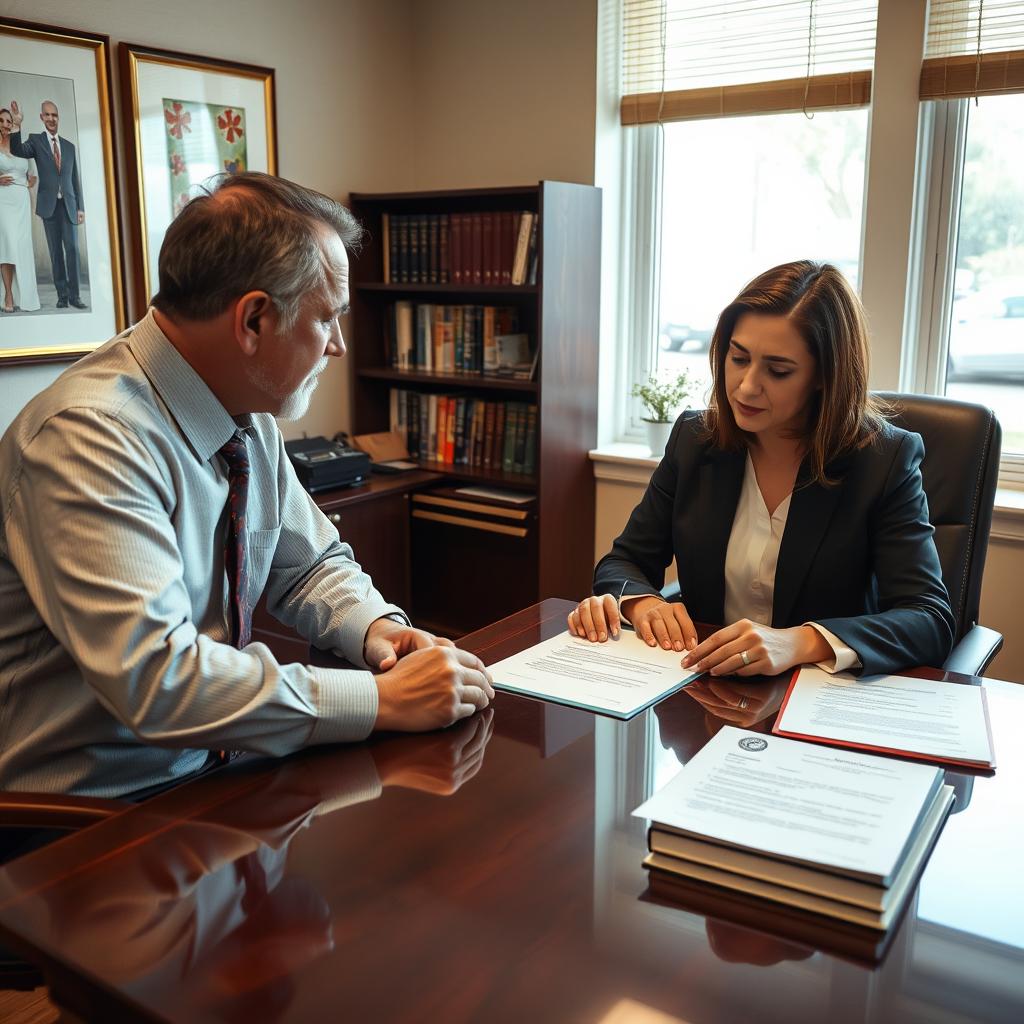
marital settlement agreement lawyer Talbot County
A marital settlement agreement lawyer Talbot County negotiates and drafts the binding contract that finalizes your divorce terms. This document dictates property division, alimony, and child-related matters under Maryland law. You need a lawyer who knows the local court’s expectations for these agreements. Law Offices Of SRIS, P.C.—Advocacy Without Borders. provides focused representation for Talbot County residents. (Confirmed by SRIS, P.C.)
Statutory Definition of a Marital Settlement Agreement in Maryland
A Marital Settlement Agreement (MSA) in Maryland is a contract governed by Maryland Family Law Code, Title 8. It is classified as a binding legal instrument that, once incorporated into a divorce judgment, carries the full force of a court order. The maximum penalty for violating its terms is contempt of court, which can result in fines or incarceration. The agreement itself is not a statute with a penalty, but its enforcement mechanisms are severe. The court’s power to enforce it is absolute once it is ratified.
Maryland law treats marital property under an “equitable distribution” standard. This is not a simple 50/50 split. The MSA is where you define what “equitable” means for your specific situation. The agreement must address all marital assets and debts. It must also resolve issues of alimony and, if applicable, child support and custody. Failing to address these matters can lead to the court rejecting the agreement. A marital settlement agreement lawyer Talbot County ensures no critical issue is overlooked.
The legal requirements for a valid MSA are strict. Both parties must provide full financial disclosure. The agreement must be entered into voluntarily, without coercion or fraud. It must also be fair and reasonable at the time of its creation. The court will review it for these elements before granting the divorce. If the court finds the agreement unconscionable, it can refuse to incorporate it. This leaves the parties to litigate their issues in court.
What specific Maryland laws govern MSAs?
Maryland Family Law Code, Sections 8-101 through 8-205 provide the framework for marital property division. Section 8-105 specifically authorizes the court to enforce agreements between parties. The Maryland Rules of Procedure, Title 9, Chapter 200, outline the process for submitting and approving settlement agreements. Case law from the Maryland Court of Appeals further defines terms like “unconscionability” and “voluntariness.” A Talbot County lawyer must apply these state laws within local procedural rules.
How does an MSA differ from a court-ordered judgment?
An MSA is a private contract negotiated between the parties, while a judgment is imposed by a judge after a trial. The key advantage of an MSA is control; you decide the terms rather than leaving it to a stranger. Once the court incorporates the MSA into the final divorce decree, it becomes a court order. Violating it then has the same consequences as violating any other court order. This hybrid nature makes precise drafting by a marital settlement lawyer Talbot County essential.
What makes an MSA legally binding and enforceable?
An MSA becomes legally binding upon the signatures of both parties, assuming it meets contract law standards. It becomes fully enforceable as a court order only when the judge signs the divorce decree that incorporates it. The enforcement mechanism is a petition for contempt filed in the Circuit Court for Talbot County. The court can use its contempt powers to compel compliance, including wage garnishment, property liens, or jail time. Proper drafting anticipates enforcement issues.
The Insider Procedural Edge in Talbot County Circuit Court
The Circuit Court for Talbot County is located at 12 North Washington Street, Easton, MD 21601. This court handles all divorce and marital settlement agreement filings for the county. Procedural specifics for Talbot County are reviewed during a Consultation by appointment at our Maryland Location. The local court has specific filing requirements and procedural preferences for MSAs. Knowing these details can prevent delays in getting your divorce finalized.
The standard timeline for an uncontested divorce with an MSA in Talbot County is typically 60 to 90 days from filing to final hearing. This assumes all paperwork is correctly completed and submitted. The filing fee for a Complaint for Absolute Divorce in Maryland is currently $165. Additional costs may include fees for service of process and any required parenting classes. The court requires financial statements and a completed settlement agreement before scheduling a final hearing. Learn more about Virginia legal services.
Local practice requires the MSA to be attached to the divorce complaint or answer. The agreement must be referenced in the pleadings. Judges in Talbot County scrutinize MSAs for fairness, especially regarding child support and custody. They expect the child support guidelines worksheet to be completed and attached if children are involved. The court clerk’s Location can provide the specific forms, but they do not give legal advice. A divorce settlement terms lawyer Talbot County manages this process from start to finish.
What is the exact filing process for an MSA in Talbot County?
You file the original Complaint for Absolute Divorce, the signed Marital Settlement Agreement, and a Civil Domestic Case Information Report with the Circuit Court clerk. The filing party must also provide a copy to the other spouse, along with a summons. If the other spouse agrees, they can file an Answer admitting the allegations and consenting to the agreement. The court then reviews the packet and, if complete, schedules an uncontested divorce hearing. A lawyer ensures every document meets the court’s checklist.
How long does the average uncontested divorce take with an MSA?
The average uncontested divorce in Talbot County takes between two and three months. The speed depends on court scheduling and the accuracy of the initial filing. The mandatory waiting period for an absolute divorce in Maryland is 12 months of separation if grounds are voluntary separation. If based on fault grounds like adultery or desertion, there is no statutory waiting period. The MSA itself can be drafted and signed well before the waiting period expires, expediting the final step.
What are the local court’s specific formatting requirements?
The Talbot County Circuit Court requires all pleadings on 8.5″ x 11″ paper with numbered lines. The MSA should be a separate document with clear headings for each major section: Property Division, Debt Allocation, Alimony, and Child-Related Provisions. All financial exhibits must be labeled and attached. The judge’s copy of the MSA should be a clean, unsigned version for review, while a signed copy is also filed. Non-compliance leads to rejection and rescheduling.
Penalties for Non-Compliance & Defense Strategies for MSAs
The most common penalty for violating an MSA is a finding of civil contempt, which can result in daily fines until compliance is achieved. The court’s primary goal is to force the violating party to obey the order. If fines do not work, the court can impose jail time. The other spouse can also file a separate breach of contract lawsuit for monetary damages. Defending against an enforcement action requires showing compliance or a valid legal reason for non-compliance.
| Offense | Penalty | Notes |
|---|---|---|
| Failure to Pay Alimony | Contempt; Wage Garnishment; Liens | Court can order immediate income withholding. |
| Failure to Transfer Property | Contempt; Court-Ordered Transfer | Judge can sign deed on behalf of refusing party. |
| Violation of Custody/Parenting Time | Contempt; Make-Up Time; Counseling Order | Can affect future custody modifications. |
| Failure to Pay Child Support | Contempt; License Suspension; Tax Refund Intercept | Enforcement is aggressive and includes federal tools. |
| Breach of Contract (Separate Suit) | Monetary Damages + Attorney Fees | Can be filed also to contempt action. |
[Insider Insight] Talbot County judges expect strict adherence to MSAs, especially regarding children and support. Prosecutors in the State’s Attorney’s Location typically do not get involved in civil contempt cases for MSA violations; it is a private enforcement action. However, for child support, the Talbot County Child Support Enforcement Location can initiate contempt proceedings independently. The local judiciary has little patience for parties who ignore clear agreements they voluntarily signed. A strong defense often hinges on proving a material change in circumstances that makes compliance impossible.
Defense strategies begin with the drafting stage. A well-drafted MSA includes specific terms, deadlines, and definitions to avoid ambiguity. If facing enforcement, you must demonstrate you made good faith efforts to comply. You can argue the agreement is unconscionable or was signed under duress, but this is difficult after court approval. A more common defense is that the terms are impossible to perform due to a job loss or medical crisis. In such cases, you must file a petition to modify the agreement, not simply ignore it. Learn more about criminal defense representation.
What are the real financial consequences of violating an MSA?
Beyond court fines, you will be ordered to pay the other side’s attorney fees for bringing the enforcement action. You may also owe interest on any late payments as specified in the agreement. If property was not transferred, you could be liable for the other spouse’s temporary housing costs. For business owners, the court can appoint a receiver to manage asset transfers. The financial fallout is typically far greater than the original obligation.
Can an MSA be modified after the divorce is final?
Alimony and child-related provisions can be modified upon a showing of a material change in circumstances. Property division terms are almost always final and cannot be modified. To modify, you must file a petition in the same Circuit Court that granted the divorce. The standard for changing child support is a significant change in income or the child’s needs. Modifying custody requires proving the change is in the child’s best interest.
What is the best defense against an enforcement action?
The best defense is documented compliance. Keep records of all payments, communications, and attempts to follow the agreement. If you cannot comply, file a petition to modify before you are in violation. In court, argue that the moving party has not met their burden of proving a willful violation. Demonstrate any external factors preventing compliance, such as a medical emergency or act of God. An experienced lawyer can frame these facts persuasively.
Why Hire SRIS, P.C. for Your Talbot County Marital Settlement Agreement
Our lead attorney for Maryland family law matters has over 15 years of litigation experience in state circuit courts. This attorney has negotiated and drafted hundreds of marital settlement agreements across Maryland. We understand the specific nuances of Talbot County’s equitable distribution approach. SRIS, P.C. focuses on creating agreements that are clear, enforceable, and designed to avoid future conflict. We protect your interests in dividing complex assets like waterfront properties, small businesses, and retirement accounts common in Talbot County.
Primary Maryland Family Law Attorney: Our seasoned attorney brings direct knowledge of Talbot County courtroom procedures and judicial preferences. This attorney has successfully represented clients in contested and uncontested divorces throughout the Eastern Shore. The focus is on strategic negotiation to reach a settlement without unnecessary court battles, while being fully prepared to litigate if the other side is unreasonable.
SRIS, P.C. provides family law attorneys with a practical, results-oriented approach. We do not waste time on positions that will not hold up in the Talbot County Circuit Court. We analyze your financial situation thoroughly to ensure the agreement is thorough. Our goal is to draft an MSA that withstands judicial scrutiny and minimizes future disputes. We offer a Consultation by appointment to review your specific circumstances and the assets involved.
Localized FAQs for Talbot County Marital Settlement Agreements
What is the difference between marital and non-marital property in Talbot County?
Marital property includes all assets acquired during the marriage, regardless of title. Non-marital property is assets owned before marriage or received by gift or inheritance. The increase in value of non-marital property during the marriage may be considered marital. A lawyer must trace the asset’s history to classify it correctly. Learn more about DUI defense services.
Is alimony assured in a Talbot County divorce?
No, alimony is not automatic. The court considers factors like the length of the marriage, each party’s financial needs and earning capacity, and the standard of living. An MSA allows you to negotiate alimony terms, including amount, duration, and conditions for modification or termination, without court intervention.
How are retirement accounts divided in a Talbot County MSA?
Retirement accounts accrued during the marriage are marital property. They are divided using a Qualified Domestic Relations Order (QDRO) for 401(k)s or a court order for other plans. The MSA should specify the percentage or dollar amount each party receives and who pays the QDRO preparation fees.
Can we create an MSA if we are not yet separated?
Yes, you can draft a separation agreement that becomes the basis for your MSA upon filing for divorce. This agreement can establish temporary support, property use, and child custody during the separation period. It demonstrates to the court that you have resolved your major issues.
What happens if my spouse hides assets during the MSA process?
Hiding assets is fraud. If discovered after the divorce, the court can reopen the case, set aside the agreement, and award you a greater share of assets. You may also seek attorney fees. Full financial disclosure under oath is required to prevent this.
Proximity, CTA & Disclaimer
Our legal team serves clients throughout Talbot County, Maryland. Procedural specifics for Talbot County are reviewed during a Consultation by appointment at our Maryland Location. We are accessible to residents in Easton, St. Michaels, Oxford, and surrounding communities. For immediate assistance with your marital settlement agreement, contact our team.
Consultation by appointment. Call 24/7. Our phone number is (301) 637-5392. We are available to discuss your case and the specifics of Maryland family law.
Law Offices Of SRIS, P.C. —Advocacy Without Borders.
Past results do not predict future outcomes.