
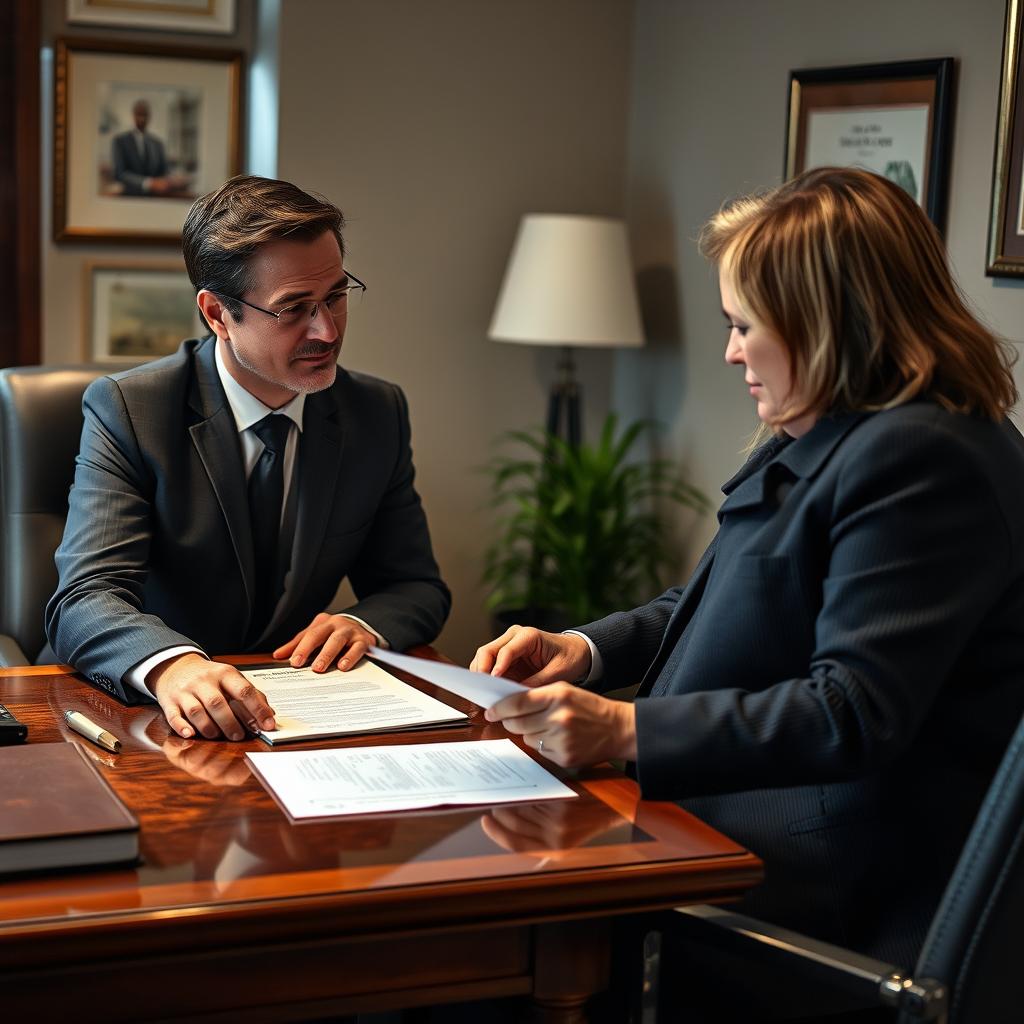
post divorce modification lawyer Baltimore, MD
When a divorce decree no longer fits the reality of your life—because your income has shifted, your custody arrangement is no longer workable, or the other party has stopped complying with the terms—you need to understand what a post-divorce modification can accomplish and how a lawyer can help you pursue it. In Baltimore, Maryland, post-divorce modification proceedings are heard in the Circuit Court for Baltimore City, Family Division, at 5800 Wabash Avenue, Baltimore, MD 21215. Law Offices Of SRIS, P.C., founded in 1997, represents parties seeking to modify support obligations, custody arrangements, and divorce decree provisions across Maryland. Mr. Sris and the firm’s Of Counsel attorneys bring extensive combined legal experience to modification matters in Baltimore City and throughout the state. To discuss your situation, contact Law Offices Of SRIS, P.C. at (888) 437-7747. Law Offices Of SRIS, P.C. – Advocacy Without Borders.
What post-divorce modification means under Maryland law
Maryland courts retain jurisdiction to modify certain provisions of a divorce decree after it has been entered. Modifications are not automatic—the party seeking the change must file a motion and demonstrate that a material change in circumstances has occurred since the last order was entered. The Circuit Court for Baltimore City hears modification petitions involving alimony, child support, custody, and visitation. Maryland is an equitable distribution state, and while property division is generally final, support and custody orders remain modifiable when the facts warrant it.
The court applies the statutory factors set out in the Maryland Family Law Article when evaluating whether a modification is justified. For child support modifications, the Maryland child support guidelines under § 12-202 provide a formula based on each parent’s adjusted income, the number of children, health insurance costs, childcare expenses, and the amount of parenting time each parent exercises. For custody modifications, Maryland courts apply the trusted-interests standard under § 9-101, which considers the fitness and character of each parent, the stability of the home environment, the child’s preference where appropriate, and any history of domestic violence or abuse. Mr. Sris and the firm’s Of Counsel attorneys appear regularly in Baltimore City family court and understand how these factors are litigated in practice.
Frequently Asked Questions
When can a Maryland court modify child support in Baltimore City?
Maryland law allows a parent to request a child support modification when there has been a material change in the financial circumstances of either parent, or when three years have passed since the last support order was entered. The court recalculates support using the Maryland child support guidelines, which consider each parent’s adjusted actual income, health insurance expenses, work-related childcare costs, and the number of overnights each parent exercises. A party seeking modification files a motion in the Circuit Court for Baltimore City, Family Division. The court schedules a hearing to review updated financial statements, pay stubs, tax returns, and parenting-time logs. A parent who lost a job, experienced a substantial change in income, or has a change in the child’s needs may petition for an adjustment. For your particular circumstances, reach Law Offices Of SRIS, P.C. at (888) 437-7747.
Can custody be modified after a divorce in Baltimore, Maryland?
Yes, custody and visitation orders in Maryland are always modifiable, but the parent asking for a change must prove a material change in circumstances and that the proposed change serves the child’s best interests. Maryland courts evaluate factors including parental fitness, the character and reputation of each parent, the child’s relationship with each parent and siblings, each parent’s willingness to support the child’s relationship with the other parent, and the stability of each home. Baltimore City Circuit Court judges may also consider a child’s stated preference if the child is mature enough. Relocation by one parent, a change in the child’s educational or medical needs, and a parent’s remarriage or cohabitation are common circumstances that lead to modification motions. Consult with a modification lawyer about the facts of your case.
How does alimony modification work in Maryland?
Maryland courts may modify an alimony award if the party seeking modification shows a change in circumstances that is material, involuntary, and not contemplated at the time of the original award. For rehabilitative alimony, modification requests must typically be filed before the rehabilitative period expires. Indefinite alimony may be modified upon a showing of changed circumstances such as the recipient’s remarriage, substantial change in either party’s income, or the payor’s retirement. The court examines the same statutory factors that governed the initial alimony determination under § 8-205 of the Maryland Family Law Article. A party must file a petition in the Circuit Court and present financial documentation supporting the claimed change. An experienced modification lawyer can advise on whether your facts support a petition.
What is required to enforce a divorce decree when the other party is not complying?
When one party fails to comply with a court-ordered obligation—such as paying support, transferring property, or following a custody schedule—the other party can file a motion for contempt or enforcement in the Circuit Court for Baltimore City. The court has the authority to compel compliance through orders directing payment, imposing sanctions, awarding attorney’s fees, or, in serious cases, ordering incarceration until compliance is achieved. Support enforcement may also proceed through the Maryland Child Support Enforcement Administration for wage garnishment, tax intercepts, and license suspension. Before filing, it is important to gather records showing the specific terms of the order and the other party’s failure to comply. For enforcement guidance, contact Law Offices Of SRIS, P.C. at (888) 437-7747.
Do both parties need to agree to a post-divorce modification in Maryland?
No, a modification can be sought by one party alone, though an agreement between the parties can simplify the process and reduce litigation costs. If both parties agree on the proposed change—whether to child support, custody, or alimony—they can submit a consent order to the court for approval. The court reviews the agreement to ensure it is not unconscionable and that it serves the child’s best interests in custody and support matters. When the parties cannot agree, the moving party files a motion and the court holds a hearing at which both sides present evidence. Even when a modification is contested, many cases resolve at mediation before a final hearing. A lawyer can negotiate on your behalf and present your position to the court.
What documents are needed for a modification case in Baltimore City?
The required documents depend on the type of modification sought, but typically include the most recent court order, financial statements, income documentation, and any evidence of the changed circumstance. For child support modifications, each party must file a financial statement detailing income, expenses, assets, and debts, along with pay stubs, tax returns, and documentation of childcare and health insurance costs. For custody modifications, evidence may include communication logs, school records, medical records, and witness statements. The Circuit Court for Baltimore City requires parties to attend a parenting seminar in cases involving minor children. An experienced modification lawyer can help you assemble the appropriate documents and present them properly to the court.
What counts as a material change in circumstances in Maryland?
Maryland courts consider a material change to be a significant and unanticipated alteration in the circumstances that existed at the time of the original order, affecting the welfare of a child or the financial position of a party. Examples include a substantial increase or decrease in either parent’s income, the loss of employment through no fault of the party, a parent’s remarriage, a change in the child’s medical or educational needs, or a parent’s plans to relocate with the child. Minor fluctuations in income or routine life changes that were reasonably foreseeable at the time of the original order generally do not meet the standard. The court holds a hearing to determine whether the asserted change meets the legal threshold before considering the merits of the requested modification.
How long does a modification case take in Baltimore City Circuit Court?
The timeline varies depending on court scheduling, the complexity of the issues, and whether the parties reach an agreement. Uncontested modifications with a signed consent order can often be resolved in a matter of weeks once the written agreement is submitted to the court. Contested modifications that require a hearing depend on the court’s docket, the availability of witnesses, and whether custody evaluations or financial discovery are needed. Temporary or emergency relief—such as a pendente lite motion for interim support or emergency custody—can be heard on an expedited basis. The timeline also depends on how promptly each party responds to discovery requests and court deadlines. Contact a modification lawyer to discuss the likely timeframe for your specific situation.
Can a post-divorce modification be filed without a lawyer in Baltimore?
Maryland law permits self-representation in family court, but modification cases involve procedural rules, financial disclosure requirements, and legal standards that can be difficult to navigate without counsel. A party proceeding without a lawyer must still comply with all filing deadlines, service requirements, rules of evidence, and the Maryland Rules of Procedure. Errors in calculating support under the guidelines, incomplete financial statements, or an inadequate showing of changed circumstances can result in denial of the petition. A lawyer can assess the strength of your claim, prepare and file the motion, negotiate with the opposing party or counsel, and present your case at the hearing. For more information, reach Law Offices Of SRIS, P.C. at (888) 437-7747.
What if the other parent moved out of state—can I still modify custody in Maryland?
Yes, if Maryland remains the child’s home state under the Uniform Child Custody Jurisdiction and Enforcement Act, the Maryland court retains jurisdiction to modify a custody order even if one parent has relocated. Home-state jurisdiction generally continues so long as the child has lived in Maryland with a parent for six consecutive months immediately before the modification filing, or if Maryland was the child’s home state within the last six months and one parent still lives in the state. If the child has moved to another state and that state has become the child’s home state, jurisdiction may shift. An attorney can determine which state has jurisdiction and file the modification in the proper court.
Can retirement justify an alimony or child support modification in Maryland?
Retirement may constitute a material change in circumstances that justifies modifying alimony or child support if the retirement was not contemplated at the time of the original order and results in a substantial change in the payor’s income. Maryland courts examine whether the retirement was in good faith at a reasonable age and not undertaken to avoid support obligations. The court may reduce support based on the retiree’s post-retirement income from pensions, Social Security, and investment income. However, if the retirement was elective and premature, or if the payor is voluntarily underemployed, the court may impute income at the previous earning level. Each case turns on its specific facts, and both parties are entitled to present evidence of the circumstances surrounding the retirement.
About Mr. Sris and the Firm’s Of Counsel Attorneys
Mr. Sris, Owner and Founder of Law Offices Of SRIS, P.C., is a former prosecutor who has practiced family law and civil litigation since 1997. He is admitted in Virginia, Maryland, the District of Columbia, New Jersey, and New York, and appears in Maryland circuit courts including the Circuit Court for Baltimore City. Mr. Sris testified before the Virginia House Courts of Justice Committee in support of 2019 HB 635 (chief patron Del. David Bulova).
The firm’s Of Counsel attorneys bring additional litigation and family-law experience to modification matters. The firm’s Maryland location in Rockville serves clients throughout the state, including Baltimore City, Anne Arundel County, Montgomery County, Prince George’s County, and Howard County. Mr. Sris and the firm’s Of Counsel attorneys have documented case results across all practice areas since 1997. Results may vary. For a consultation about post-divorce modification, custody, support, or enforcement, contact Law Offices Of SRIS, P.C. at (888) 437-7747.
Related practice areas: Divorce Lawyer Baltimore, MD | Child Support Lawyer Baltimore, MD | Custody Lawyer Baltimore, MD | Alimony Lawyer Baltimore, MD | Family Law Lawyer Baltimore, MD
Official resources: Maryland Family Law Article § 7-103 | Maryland Child Support Guidelines § 12-202 | Circuit Court for Baltimore City | Maryland Courts
Attorney advertising. Prior results do not guarantee a similar outcome. Results may vary.
Case results depend on a variety of factors unique to each case.