
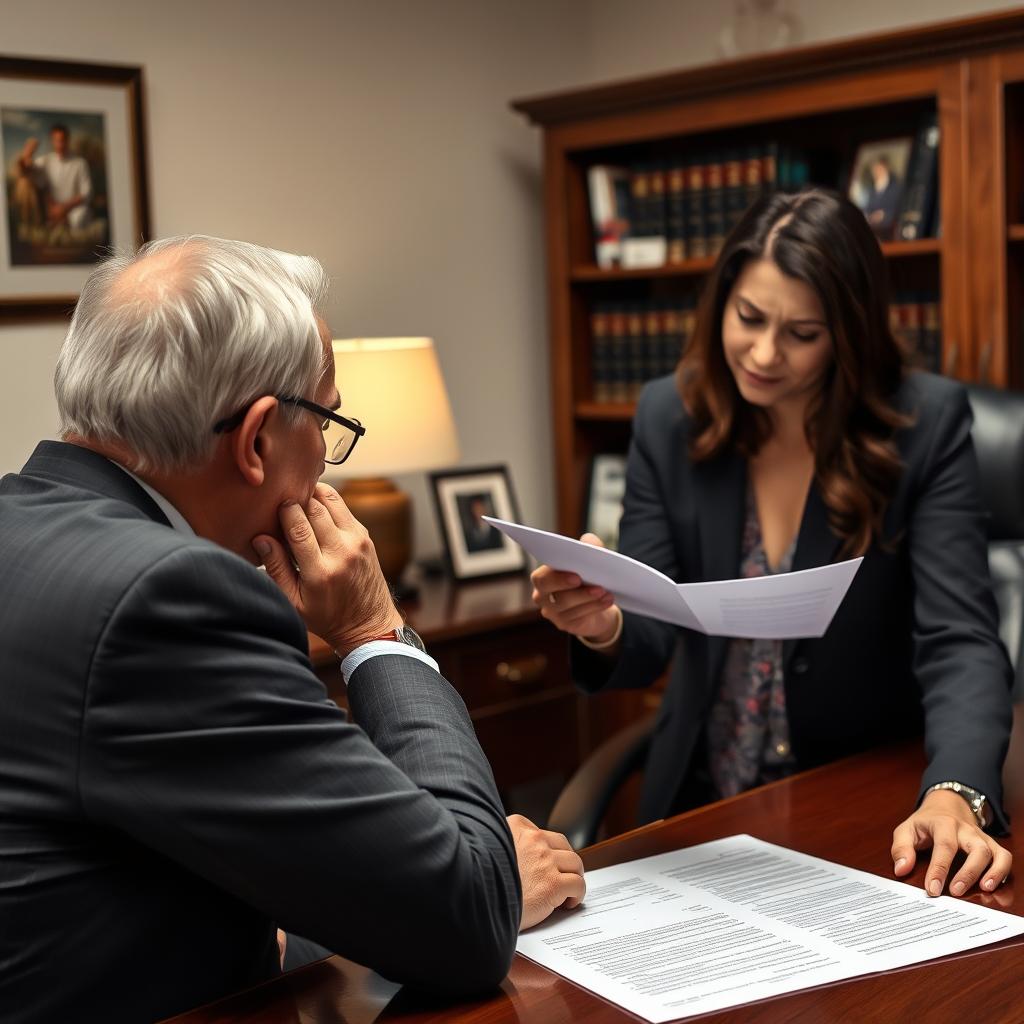
postnuptial agreement lawyer Kent County
A postnuptial agreement lawyer Kent County drafts and enforces contracts after marriage under Virginia law. Law Offices Of SRIS, P.C. —Advocacy Without Borders. These agreements define property division and support if a marriage ends. They require full financial disclosure and independent legal counsel to be valid. A Kent County postnuptial agreement lawyer ensures your contract meets all statutory requirements. (Confirmed by SRIS, P.C.)
Statutory Definition of a Virginia Postnuptial Agreement
Virginia postnuptial agreements are governed by common law and the Uniform Premarital Agreement Act as applied by courts, with enforceability hinging on contract principles and fairness at execution. Virginia does not have a specific statute codifying postnuptial agreements. Courts apply contract law principles and equity under Virginia Code § 20-155, which addresses marital property settlements. The key is proving the agreement was entered voluntarily with full disclosure. A poorly drafted agreement can be set aside entirely, leaving asset division to a judge.
These contracts are signed after the wedding date. They address the same issues as a prenuptial agreement. The primary focus is separating marital property from separate property. Virginia courts scrutinize postnuptial agreements closely. Judges look for any sign of coercion or duress. The timing of the agreement after marriage increases this scrutiny. Full financial transparency from both spouses is mandatory. Hiding assets or debts invalidates the contract. Each party must have their own legal counsel. This is a critical factor for a judge reviewing the pact.
The agreement must be in writing and signed by both parties. Notarization is strongly recommended for authenticity. The terms must be conscionable and not promote divorce. An agreement that encourages separation may be void. The court can review the fairness of the agreement at the time of enforcement. Virginia case law, particularly *Simeone v. Simeone*, sets precedent for enforcement standards. A postnuptial agreement lawyer Kent County uses this legal framework to build a solid contract.
What legal standards apply to a postnup in Virginia?
Virginia courts enforce postnuptial agreements under contract law and equitable principles. The agreement must be voluntary, with informed consent from both parties. Full and fair financial disclosure is a non-negotiable requirement. The terms cannot be unconscionable when the agreement is signed. Procedural and substantive fairness are both examined by the court.
How does a post-marriage agreement differ from a prenup?
A post-marriage agreement is executed after the wedding ceremony, while a prenup is signed before. This timing difference significantly increases judicial scrutiny for postnuptial pacts. The presumption of potential duress is higher during a marriage. The legal standards for enforceability are consequently more stringent. A postnuptial agreement lawyer Kent County must account for this heightened review.
What core financial details must be disclosed?
Both parties must fully disclose all assets, liabilities, and income streams. This includes real estate, bank accounts, investments, retirement accounts, and business interests. Debts like mortgages, loans, and credit card balances must also be revealed. Omitting any major financial detail provides grounds to void the agreement. Complete transparency is the foundation of a valid contract.
The Insider Procedural Edge in Kent County
Kent County family law matters are heard in the Kent County Circuit Court located at 125 N. Main Street, P.O. Box 37, Chestertown, MD 21620. Virginia’s Eastern Shore, including Kent County, utilizes a unified court system. For family law and contract enforcement, the Circuit Court holds jurisdiction. The court’s address is a central point for filing legal documents. Knowing the exact filing location prevents procedural delays.
Filing a postnuptial agreement itself does not require court approval. The agreement becomes relevant if you later file for divorce or separation. At that point, the contract must be presented to the court for enforcement. The judge will review the agreement’s validity during the divorce proceedings. If upheld, the agreement dictates the terms of property division. If challenged, a separate evidentiary hearing may be required. This hearing determines if the agreement meets Virginia’s legal standards.
Procedural specifics for Kent County are reviewed during a Consultation by appointment at our Virginia Location. Filing fees for initiating a divorce action where the agreement is invoked vary. Timelines from filing to final hearing depend on court docket schedules. Local rules may dictate specific formatting for legal documents. Working with an attorney familiar with the local clerk’s Location is advantageous. They understand the preferences of the court’s administrative staff.
What is the typical court timeline for enforcement?
Enforcement occurs within the timeline of the underlying divorce case. A contested hearing on the agreement’s validity can add months to the process. The court’s docket availability is the primary factor determining speed. An uncontested enforcement where both parties agree is far quicker. A postnuptial agreement lawyer Kent County can manage expectations.
Where are legal documents formally filed?
Documents are filed with the Clerk of the Circuit Court for Kent County. The physical address is required for serving paperwork and making filings. Electronic filing may be available but should be confirmed with the clerk. Proper filing secures your place on the court’s docket. Incorrect filing leads to rejected documents and wasted time.
Penalties for Invalid Agreements & Defense Strategies
The most common penalty for an invalid postnuptial agreement is the court ignoring it and applying Virginia’s equitable distribution laws. If a postnuptial agreement is found unenforceable, the court proceeds as if it never existed. Virginia’s equitable distribution statute, Code § 20-107.3, then governs. This means a judge decides how to classify and divide all marital property. The outcome is unpredictable and often unfavorable to one party. The “penalty” is losing the certainty and protection the contract provided.
| Offense Against Validity | Penalty | Notes |
|---|---|---|
| Failure of Financial Disclosure | Agreement Voidable | Court can set aside entire contract. |
| Procedural Unfairness (Duress, Coercion) | Agreement Void | Timing during marital strife is scrutinized. |
| Unconscionable Terms | Terms Struck or Agreement Void | Court reviews fairness at time of signing. |
| Lack of Independent Legal Counsel | Heavy Scrutiny, Likely Void | Strong presumption against enforcement. |
[Insider Insight] Local prosecutors are not involved in this civil matter. However, judges in Virginia’s Eastern Shore circuits are known for a strict, literal interpretation of contract and equity principles. They do not look favorably upon agreements where one party appears disadvantaged without clear cause. Presenting clear evidence of independent advice and full disclosure is paramount.
Defense strategies begin during the drafting phase. Ensure each spouse retains their own Virginia family law attorney. Document the financial disclosure process thoroughly. Use schedules and exhibits attached to the agreement. Create a paper trail of waivers and acknowledgments. Avoid signing during periods of marital crisis or reconciliation. These strategies build a defensible record of voluntariness and fairness.
What are the financial risks of a void agreement?
The financial risk is an equal or disproportionate division of marital assets by a judge. Separate property may be commingled and considered marital. Spousal support obligations may be imposed where the agreement waived them. Retirement accounts earned during the marriage are subject to division. The cost of litigating the agreement’s validity adds significant legal fees.
How can lack of legal counsel be defended?
The defense is to prove the party knowingly waived independent counsel after being advised to seek it. The agreement should contain a bold, separate paragraph stating this recommendation. The uncounseled party must initial this paragraph. Proof of opportunity to consult an attorney is necessary. A postnuptial agreement lawyer Kent County ensures these safeguards are in place.
Why Hire SRIS, P.C. for Your Kent County Postnup
SRIS, P.C. attorneys use deep experience in Virginia marital contract law to protect your assets. Our team includes attorneys who have handled numerous marital agreements across the state. We understand the precise language needed to satisfy Virginia courts. Our focus is on creating clear, unambiguous, and legally sound documents. We anticipate potential challenges and draft to withstand them.
Attorney Background: Our lead marital agreement attorneys have backgrounds in complex criminal defense representation and civil litigation. This experience is critical for constructing agreements under pressure and foreseeing adversarial tactics. They apply trial-level scrutiny to the drafting process, ensuring every clause is defensible.
Our firm differentiator is a systematic approach to financial disclosure. We guide clients in gathering and organizing all required financial data. We create disclosure schedules that leave no room for accusation of hiding assets. We insist on representation for both parties to bolster enforceability. We provide candid assessments of whether proposed terms are likely to be upheld. SRIS, P.C. prepares your agreement for the courtroom from day one.
Localized Kent County Postnuptial Agreement FAQs
Can a postnuptial agreement address spousal support in Virginia?
Yes, a Virginia postnuptial agreement can modify or waive future spousal support obligations. The terms must be clear and not unconscionable at the time of signing. Courts review support waivers with particular care for fairness.
Is a notary required for a postnup in Kent County?
Virginia law does not mandate notarization for a postnuptial agreement to be valid. However, having the signatures notarized is a best practice. It provides sworn verification of identity and signing, strengthening the document against future challenges.
How long does it take to draft a post-marriage agreement?
The drafting process typically takes several weeks from initial consultation to final signing. The timeline depends on the complexity of your finances and the need for full disclosure. Negotiations between parties and their attorneys can extend this period.
Can we modify an existing postnuptial agreement?
Yes, a postnuptial agreement can be modified by a subsequent written amendment. The amendment must meet the same legal standards as the original agreement. It requires voluntary consent, full disclosure, and independent legal advice for both spouses.
What happens to a postnup if we move out of Virginia?
The agreement’s enforceability will be determined under the laws of your new state. Most states will honor a validly executed Virginia agreement, but this is not assured. Including a “choice of law” clause specifying Virginia law is a protective measure.
Proximity, Consultation & Essential Disclaimer
SRIS, P.C. provides legal services for clients in Kent County, Virginia. Our Virginia Location is strategically positioned to serve the Eastern Shore region. We are accessible for clients in Chestertown and throughout Kent County. Consultation by appointment. Call 888-437-7747. 24/7.
For dedicated DUI defense in Virginia or other family law matters, contact our team. Learn more about our experienced legal team and their approach to your case. We focus on practical, results-oriented legal strategies for marital agreements.
Past results do not predict future outcomes.