
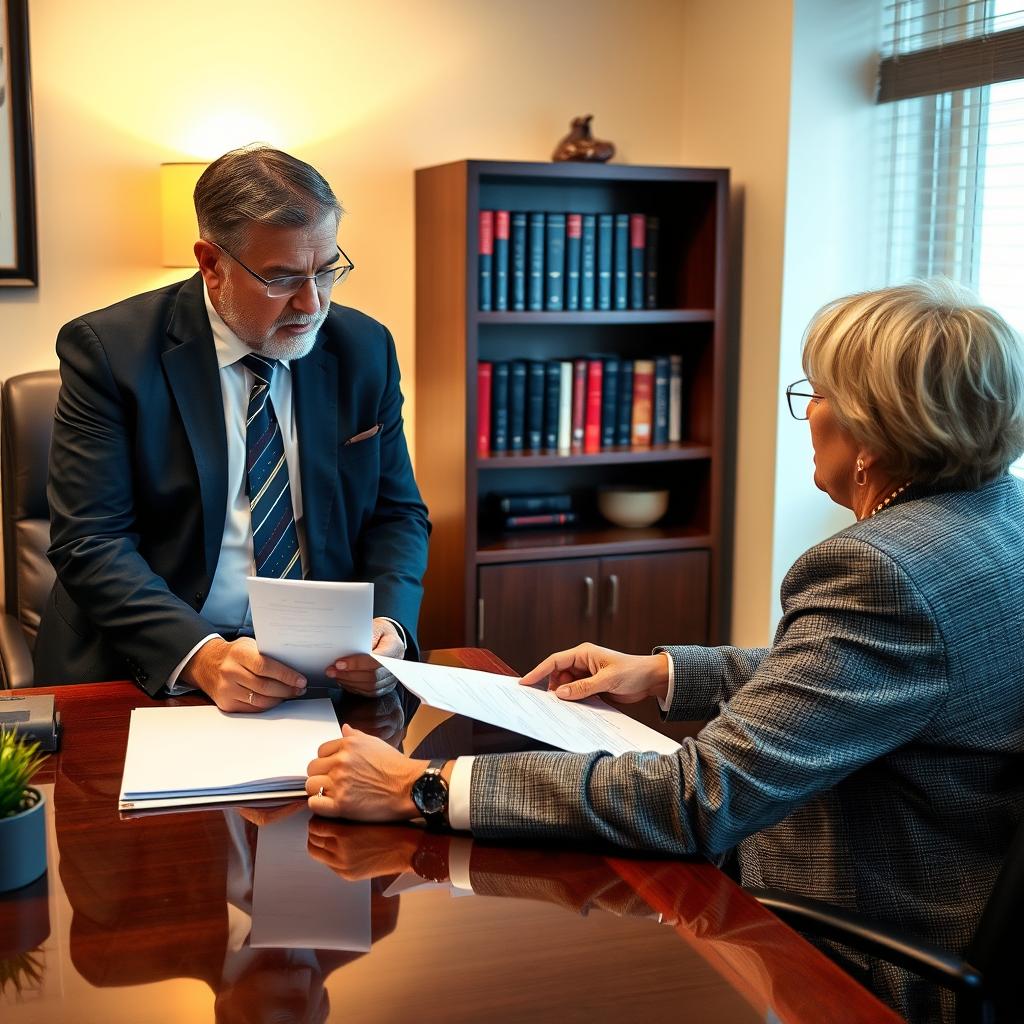
rehabilitative alimony lawyer Baltimore County, MD
If you are going through a divorce in Baltimore County and one spouse needs financial assistance to rebuild earning capacity, rehabilitative alimony may be a critical piece of the settlement. Rehabilitative alimony is a form of temporary spousal support designed to help the receiving spouse obtain education, training, or work experience so that they can become self‑supporting after the marriage ends. Mr. Sris and the firm’s Of Counsel attorneys represent clients in rehabilitative alimony matters at the Baltimore County Circuit Court, located at 120 East Chesapeake Avenue, Towson, Maryland 21286. The firm’s Rockville location serves families throughout Baltimore County, including Towson, Dundalk, Essex, Catonsville, Pikesville, Cockeysville, Reisterstown, Owings Mills, Perry Hall, White Marsh, and Timonium. To discuss whether rehabilitative support may be appropriate in your case, reach Law Offices Of SRIS, P.C. at (888) 437‑7747. Law Offices Of SRIS, P.C. – Advocacy Without Borders.
What Rehabilitative Alimony Means in Baltimore County
Maryland alimony law, codified at Md. Code, Family Law Article § 8‑205, authorizes courts to award three broad forms of spousal support: temporary alimony (pendente lite), rehabilitative alimony, and indefinite alimony. Rehabilitative alimony is the most common form because Maryland public policy favors a spouse’s eventual financial independence. The court’s objective is to give the economically disadvantaged spouse a defined period of support that covers the cost of education, vocational training, or other steps necessary to re‑enter the workforce at a level reasonably commensurate with the marital standard of living.
In Baltimore County, the Circuit Court for Baltimore County—Family Division hears all divorce, alimony, equitable distribution, and related property division matters. When a party requests rehabilitative alimony, the judge considers a list of statutory factors, including the length of the marriage, the age and health of each spouse, each spouse’s earning capacity and education, the standard of living established during the marriage, the financial needs of each spouse, and any contributions one spouse made to the other’s education or career. No single factor controls, and the court has broad discretion to tailor an award that fits the specific circumstances of the family. A divorce filing in Baltimore County Circuit Court requires a filing fee, plus service costs and other court expenses; the court may also order a parenting seminar if minor children are involved. The family division is located at 120 East Chesapeake Avenue, Towson, MD 21286, and operates under the Eighth Judicial Circuit.
How Mr. Sris and His Of Counsel Handle Rehabilitative Alimony Cases
Law Offices Of SRIS, P.C. takes a practical, fact‑driven approach to rehabilitative alimony. When a client first meets with the firm, Mr. Sris and the firm’s Of Counsel attorneys review the financial picture of both spouses—income, assets, separate and marital property, vocational history, and any documented need for retraining. The team then develops a strategy aimed at either securing a fair rehabilitative award for the dependent spouse or, if you are the potential payor, defending against an overstated claim. The goal is to build a support structure that is realistic, tied to a concrete plan for the recipient’s self‑sufficiency, and aligned with the statutory factors that the Baltimore County Circuit Court will apply.
Throughout the process, the firm handles all motion practice, discovery, and negotiation. If a pendente lite hearing is necessary to address temporary support while the divorce is pending, Mr. Sris and the firm’s Of Counsel attorneys prepare and present the evidence needed for a prompt ruling. Many cases are resolved through negotiated settlement agreements that avoid the cost and uncertainty of a trial. When a contested hearing is unavoidable, the firm has the trial experience to present a thorough case to the court. Rehabilitative alimony awards are never past results do not guarantee a similar outcome; each outcome depends on the specific evidence presented and the judge’s application of the statutory factors. The firm’s role is to ensure the court has the full picture and that your interests are vigorously represented.
About Mr. Sris and the Firm’s Of Counsel Attorneys
Mr. Sris, Owner and Founder of Law Offices Of SRIS, P.C., has been practicing family law since 1997. A former prosecutor, Mr. Sris brings a courtroom‑tested perspective to contested family law matters. His background includes testifying before the Virginia House Courts of Justice Committee in support of 2019 HB 635 (chief patron Del. David Bulova). Mr. Sris is admitted to practice in Virginia, Maryland, the District of Columbia, New Jersey, and New York.
The firm’s Of Counsel attorneys are independent practitioners who contract directly with Law Offices Of SRIS, P.C. Each Of Counsel attorney is experienced in family law litigation and contributes to the firm’s broad ability to handle complex divorce and alimony cases. Together, Mr. Sris and his Of Counsel bring extensive combined legal experience. Mr. Sris and the firm’s Of Counsel attorneys have documented case results since 1997. Results may vary.
Frequently Asked Questions
What is rehabilitative alimony in Maryland?
Rehabilitative alimony is temporary spousal support awarded to help a financially dependent spouse gain education, training, or work experience so they can become self‑supporting after divorce. Maryland courts favor rehabilitative awards over indefinite support. The purpose is to give the recipient a realistic chance to re‑enter the workforce at a level close to the marital standard of living. The duration and amount of rehabilitative alimony are based on the factors listed in Md. Code, Family Law Art. § 8‑205, including the length of the marriage, the recipient’s age and health, and the payor’s ability to pay. For a detailed assessment of your situation, reach Law Offices Of SRIS, P.C. at (888) 437‑7747.
How does a Baltimore County court decide whether to award rehabilitative alimony?
The Baltimore County Circuit Court analyzes a set of statutory factors to determine whether rehabilitative alimony is appropriate and, if so, its amount and duration. The judge will look at the standard of living during the marriage, the duration of the marriage, each spouse’s age, physical and mental condition, their respective earning capacities and employment histories, the financial resources and needs of each party, contributions made to the other’s education or career, and any marital misconduct that may have led to the breakdown of the marriage. The court’s overriding goal is to craft a support order that gives the disadvantaged spouse a genuine opportunity to become independent while not imposing an unreasonable burden on the paying spouse. To learn how these factors might apply to your case, contact Law Offices Of SRIS, P.C. at (888) 437‑7747.
Can rehabilitative alimony be modified after the divorce is final?
Yes, rehabilitative alimony may be modified if there has been a material change in circumstances since the original order. Common grounds for modification include a significant change in either spouse’s income, loss of employment, disability, or the recipient’s failure to make reasonable progress toward self‑sufficiency. Either party can file a motion to modify in the Baltimore County Circuit Court. The court will review the facts and may adjust the amount, duration, or termination date of the award. Because modification proceedings can be contested, having experienced counsel is important to present the changed circumstances clearly. For guidance on your specific situation, reach Mr. Sris and the firm’s Of Counsel attorneys at (888) 437‑7747.
Do I need a lawyer for a rehabilitative alimony case in Baltimore County?
While you are not legally required to hire a lawyer, having an experienced family law attorney is strongly advisable because rehabilitative alimony disputes often turn on detailed financial evidence and statutory arguments. The Baltimore County Circuit Court expects parties to present income documentation, vocational‑rehabilitation plans, and sometimes expert testimony about earning capacity. A lawyer can help you gather the right evidence, negotiate a fair settlement, and, if necessary, advocate for your position at a hearing. The stakes are high because the award directly affects both spouses’ financial futures. To discuss the details of your matter, contact Law Offices Of SRIS, P.C. at (888) 437‑7747.
How long does it take to resolve a rehabilitative alimony issue in Baltimore County?
The timeline depends on the complexity of the divorce, whether the case settles or goes to trial, and the court’s docket. In uncontested divorces where both spouses agree on alimony terms, the process can be resolved relatively quickly after the mandatory waiting period expires. Contested cases, especially those requiring vocational evaluations or expert testimony, can take considerably longer. The Baltimore County Circuit Court schedules hearings based on its calendar, and the parties’ readiness to proceed. An attorney can help you pursue a resolution as expeditiously as the circumstances allow. To speak with a lawyer about your timeline, reach Law Offices Of SRIS, P.C. at (888) 437‑7747.
Related family law services:
- Family Law Attorney Montgomery County, MD
- Family Law Attorney Prince George’s County, MD
- Family Law Attorney Howard County, MD
- Family Law Attorney Anne Arundel County, MD
- Family Law Attorney Frederick County, MD
For more information about Maryland family law, visit the Md. Code, Family Law Article, the Maryland Judiciary Family Law Help Center, and the Circuit Court for Baltimore County.
Attorney advertising. Prior results do not guarantee a similar outcome.
Case results depend on a variety of factors unique to each case.